
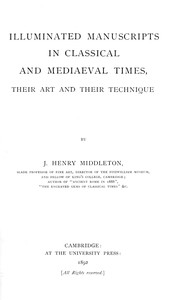
Illuminated manuscripts in classical and mediaeval times, their art and their…
Published in 1892, J.H. Middleton's book isn't a novel with a plot, but it tells an incredible true story. It’s the story of the book itself, from the fall of Rome to the dawn of the Renaissance.
The Story
Middleton acts as your guide through a thousand years of art history. He starts by explaining why these books were so important—they were the primary vessels for preserving knowledge, scripture, and law. The 'story' follows the evolution of the craft. You see how styles changed from the intricate, almost knot-like patterns of Irish manuscripts like the Book of Kells to the more figurative and narrative scenes in later Gothic works. He walks you through the entire creation process, which is a saga in itself: preparing the parchment, mixing inks and pigments from minerals and plants, the painstaking work of scribes, and the final, glorious illumination with gold and vibrant colors. It's a tale of quiet dedication in monastery workshops and later, in the busy studios of professional artists.
Why You Should Read It
What makes this old book still compelling is its sheer enthusiasm. Middleton writes with the awe of someone showing you a magic trick and then revealing how it's done. Knowing that a brilliant blue might come from crushed lapis lazuli, hauled from Afghanistan, makes you see these pages differently. It connects you to a global trade network in the medieval world. This isn't just art appreciation; it's a lesson in material science and human ingenuity. It pulls back the curtain, and instead of diminishing the magic, it increases it. You realize these weren't just pretty pictures; they were acts of devotion, status symbols, and technological marvels all rolled into one.
Final Verdict
This is a perfect read for history buffs, artists, or anyone who loves behind-the-scenes details about how beautiful things are made. Because it's from the 1890s, the language is formal in places, but its passion is timeless. It’s not a quick, glossy coffee-table book. It's a thoughtful, detailed conversation with an expert who wants you to see the world in the glow of a painted initial. If you've ever visited a museum, been stunned by a manuscript page under glass, and wanted to know more, Middleton is your patient, knowledgeable friend explaining it all.
This historical work is free of copyright protections. You do not need permission to reproduce this work.
Jessica Jackson
11 months agoAfter a thorough walkthrough of the table of contents, the wealth of information provided exceeds the average market standard. This should be on the reading list of every serious professional.
Jennifer Smith
1 year agoI found the author's tone to be very professional yet accessible, the historical context mentioned in the early chapters is quite enlightening. A rare gem in a sea of mediocre content.
Joseph Jackson
9 months agoAfter a thorough walkthrough of the table of contents, the practical checklists included are a great touch for real-world use. Simple, effective, and authoritative – what else could you ask for?
Michelle Garcia
1 year agoGreat read!




Charles Jackson
6 months agoThe peer-reviewed feel of this content gives me great confidence.