1

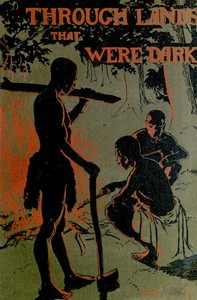
Through lands that were dark Being a record of a year's missionary journey in Africa and Madagascar — A Reader’s Guide
9
3
Project Gutenberg
2023
Missions -- South Africa; London Missionary Society -- History; Missions -- Madagascar; Missions -- Zambia
Readers of public-domain and historical texts
Project Gutenberg digital edition
en
Edition facts
Words: 41,836
Reading time: 182 min
Text sections: 16
Source:
Project Gutenberg record #69906
A 1914 missionary journey record structured as a travelogue across South Africa, Central Africa, and Madagascar, using light/dark imagery and first-person journal letters to document stations, outbreaks, and encounters.
Editorial Edition Score
4.8/5
★★★★★
★★★★★
Calculated from edition completeness, EPUB availability, text structure and catalogue metadata. Not a user rating.
Edition quality
F. H. Hawkins structures his 1914 record as a journey in three geographic parts—South Africa, Central Africa, and Madagascar—each introduced with a section heading that pairs a place with a biblical or poetic phrase. The book opens with a poem by John Oxenham that establishes a recurring light-versus-darkness motif, which Hawkins then threads through his prose. The narrative is built from journal letters written to family and friends, a choice that explains the first-person voice and the episodic, scene-by-scene movement between mission stations.
Movement Between Stations and Crises
Hawkins’s account proceeds as a series of arrivals and departures, each station a discrete episode. At Mpolokoso, a smallpox outbreak forces a curtailed stay: “nearly half the inhabitants of the village suffering from this scourge.” The scene is rendered through concrete details—infected huts burned, carriers put into custody, “thin columns of smoke ascending from the burning huts into the cloudless sky.” The narrative does not linger in reflection but moves on, mirroring the journey’s pace. Hawkins notes the death of Chief Mpolokoso and the efforts of the Native Commissioner, then shifts to the next location. This structure emphasizes the precariousness of travel and the abrupt interruptions that define missionary work in the region.
Light and Dark as Structural Imagery
The title itself announces a polarity that governs the book’s language. Section headings pair “Darkness and Light” (South Africa) with “The Brightness of His Rising” (Central Africa) and “The Sombre Fringes of the Night” (Betsileo). The foreword poem repeats “Bring us the Light” as a refrain, and Hawkins’s prose echoes this: Tiger Kloof is called “A Lamp Shining in a Dark Place,” and Tananarive is “A City set on a Hill.” The imagery is not merely decorative; it organizes the geography into moral and spiritual zones. Yet Hawkins also records practical obstacles—disease, administrative delays—that complicate any simple narrative of enlightenment.
Quoting a Roman Catholic Commissioner
One of the most distinctive passages in the excerpts is a long quotation from Mr. Cullen Gouldsbury, the Native Commissioner, who is a Roman Catholic. Hawkins reproduces Gouldsbury’s description of a missionary couple, “Saunders,” with its playful account of “Kapembwa ping-pong” and the wife’s “adorable touch of Lancashire.” The inclusion of an outsider’s voice—one who notes that missionaries are “hard-working, whatever else they may be”—adds a layer of external testimony. Hawkins frames this as valuable because Gouldsbury is “himself a Roman Catholic,” implying that praise from a different denomination carries special weight. The passage also reveals Hawkins’s method: he lets others speak at length, building his record from multiple perspectives.
The Foreword’s Justification of Form
Hawkins explains in the foreword that the book is “based upon a series of Journal Letters written to my family and friends,” and that this fact “must be my excuse for writing in the first person.” He also notes it was “prepared in the midst of the pressure of Secretarial work.” These admissions signal that the text is not a polished retrospective but an assembled record, shaped by the constraints of time and the original epistolary format. The result is a work that moves quickly between scenes, with little connective tissue. Readers should expect abrupt transitions and a focus on immediate events rather than sustained analysis.
Because the excerpts cover only portions of the journey, the full book likely continues the pattern of station-by-station reporting. Readers may find it useful to track the recurrence of the light/dark imagery and to note how Hawkins integrates quoted testimony from officials and other missionaries. The journal-letter format means that some passages may feel fragmentary; the book rewards attention to its small, concrete observations—a burning hut, a game of ping-pong, a chief’s death—rather than to overarching argument.
Reader reflection
Your personal reading reflection
Build a private reading journal entry for this title.
Your progress
0
/
10
2
How much did you enjoy the reading experience?
3
How likely are you to recommend this book?
4
Did the language feel accessible?
5
Would this book work well in a reading group?
6
How clearly were the main ideas presented?
7
Is this a title worth rereading?
8
What did you appreciate most?
9
In one sentence, what did you learn?
10