1

The Book of Job — Background and Themes
7
1
Project Gutenberg
2025
Bible. Job -- Illustrations; Bible. Job; Bible. Job -- Criticism, interpretation, etc.
Readers of public-domain and historical texts
Project Gutenberg digital edition
en
Edition facts
Words: 27,588
Reading time: 120 min
Text sections: 49
Source:
Project Gutenberg record #75778
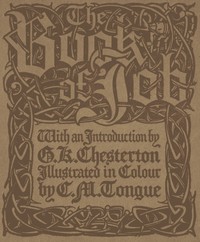
This edition of the biblical Book of Job features an introduction by G. K. Chesterton and color illustrations by C. Mary Tongue. The text presents the poetic dialogues between Job and his friends, framed by a prose prologue and epilogue, with Chesterton's essay addressing the work's philosophical and historical riddles.
Editorial Edition Score
4.8/5
★★★★★
★★★★★
Calculated from edition completeness, EPUB availability, text structure and catalogue metadata. Not a user rating.
Edition quality
The Book of Job, as presented in this 1916 edition, opens with a prose prologue that establishes Job as a prosperous and pious man. The text immediately introduces a pattern of feasting and sacrifice: Job's sons host banquets, and Job rises early to offer burnt offerings, a detail that underscores his ritual devotion. The narrative swiftly shifts to a heavenly council where Satan challenges Job's integrity, setting the stage for the calamities that follow. This framing—a domestic scene of abundance and piety disrupted by cosmic wager—creates a stark contrast between human order and divine testing.
G. K. Chesterton's introduction, which precedes the biblical text, offers a distinct entry point. He characterizes the book as both a philosophical and historical riddle, cautioning readers against dismissing the possibility of gradual composition. Chesterton's voice, with its characteristic paradox and wit, prepares the reader to engage with the work's layered structure and enduring questions.
The Prologue's Economy of Detail
The opening chapters of Job employ a spare, repetitive style that emphasizes ritual and loss. Job's sons feast “every one his day,” and Job responds with burnt offerings “according to the number of them all.” This formulaic language establishes a world of order and piety. When disaster strikes, the messengers arrive in rapid succession, each beginning with “thy sons and thy daughters were eating and drinking wine in their eldest brother's house.” The repetition of this phrase, even as the news grows worse, creates a rhythmic accumulation of grief. The text does not dwell on Job's emotional response; instead, it reports his actions: he rends his mantle, shaves his head, falls down, and worships. The famous line “the Lord gave, and the Lord hath taken away; blessed be the name of the Lord” is delivered without narrative commentary, leaving the reader to weigh its meaning against the suffering described.
The Friends' Accusatory Logic
In the poetic dialogues, Job's friends—Eliphaz, Bildad, and Zophar—argue from a premise of retributive justice. Eliphaz, in chapter 22, asks Job, “Is not thy wickedness great? And thine iniquities infinite?” He then lists specific sins: taking pledges from the poor, withholding water and bread, sending widows away empty. These accusations are not based on evidence from the prologue but on the assumption that suffering must be punishment. The friends' speeches are structured as logical arguments: they assert a principle, apply it to Job, and draw conclusions. Their language is concrete—snares, darkness, floods—but their reasoning is circular. Job's responses, by contrast, shift between lament, legal metaphor, and direct challenge to God. The reader observes a clash not only of positions but of rhetorical modes: the friends' confident syllogisms versus Job's raw, questioning voice.
Job's Voice of Lament and Challenge
Job's speeches in the excerpts reveal a speaker who oscillates between despair and defiance. In chapter 21, he questions why the wicked prosper, listing their comfortable lives: “Their houses are safe from fear, neither is the rod of God upon them.” He observes that the wicked “spend their days in wealth, and in a moment go down to the grave.” This empirical observation undercuts the friends' doctrine of immediate retribution. Job also employs legal language, demanding a hearing: “Suffer me that I may speak; and after that I have spoken, mock on.” He insists on his integrity and challenges God to answer. The poetry is dense with images of natural processes—the candle put out, chaff carried by the storm, clods of the valley—that ground his arguments in the physical world. His voice is personal, urgent, and unflinching, even as it acknowledges the bitterness of his soul.
Chesterton's Interpretive Frame
G. K. Chesterton's introduction, written for this edition, provides a distinct lens for reading the biblical text. He identifies the book as a “philosophical riddle” and warns against dismissing the possibility of interpolation, noting that “the trend of investigation has always been in the direction of maintaining that the parts interpolated, if any, were the prose prologue and epilogue.” Chesterton does not resolve the riddle but instead invites the reader to consider the work's gradual growth as a strength, comparing it to Westminster Abbey. His essay is characterized by paradoxical statements and a conversational tone that contrasts with the solemnity of the biblical poetry. Readers encountering the text for the first time may find Chesterton's introduction a useful entry point, though it reflects his own early 20th-century perspective and should not be mistaken for the voice of the ancient text itself.
This edition pairs the King James Version of Job with Chesterton's introduction and Tongue's color illustrations, offering multiple entry points into the text. Readers may choose to begin with the biblical narrative, letting the poetry speak for itself, or with Chesterton's essay, which frames the work as a philosophical puzzle. The illustrations, listed in the front matter, depict key scenes such as Job offering burnt offerings and the Lord answering out of the whirlwind, providing visual anchors for the reader. As you read, attend to the shifts between prose and poetry, the repetition of phrases, and the way Job's voice evolves from patient acceptance to urgent questioning.
Reader reflection
What did you think of this book?
Answer a few questions and save a private reflection on this device.
Your progress
0
/
10
2
Did this book hold your interest?
3
Would you encourage someone else to read it?
4
How demanding did the text feel?
5
How useful did the reading feel?
6
Did the book deliver what you hoped for?
7
How strong was your personal connection to the text?
8
Did anything about the book feel genuinely new?
9
What changed or sharpened your thinking?
10