
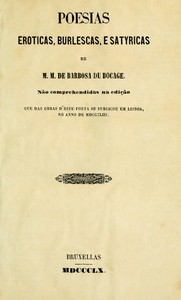
Poesias Eroticas, Burlescas, e Satyricas de M.M. de Barbosa du Bocage by Bocage
So, what exactly is this book? It’s a collection of poems by Manuel Maria Barbosa du Bocage, a Portuguese writer from the turn of the 19th century. Forget everything you think you know about poetry from that time. Bocage wasn't writing polite odes. His work is divided into three rough categories that give the book its name: the Erotic, the Burlesque (think silly, exaggerated mockery), and the Satirical.
The Story
There isn't a single plot. Instead, you get a front-row seat to Bocage's brilliant, troubled mind. The 'story' is his lifelong battle with the rules. In the erotic poems, he celebrates physical love with a directness that was downright dangerous in his era. In the satirical and burlesque ones, he takes aim at everyone: pompous nobles, corrupt politicians, and hypocritical clergy. He used his wit as a weapon, and it landed him in hot water more than once. Reading the collection, you trace the arc of a man who was jailed, persecuted by the Inquisition, and yet never stopped writing exactly what he thought.
Why You Should Read It
I love this book because it completely shatters the dusty image of 'classic literature.' Bocage feels incredibly modern. His frustration with fake people, his defense of genuine passion, and his dark, cynical jokes about power are things we can all relate to today. You're not just reading poems; you're getting to know a personality—flawed, loud, passionate, and defiant. It's a powerful reminder that people in the past weren't just prim and proper. They had the same messy desires and saw the same stupidities in society that we do. Bocage just had the courage (or the recklessness) to put it all on paper.
Final Verdict
This is a perfect pick for anyone who thinks old poetry is boring. If you enjoy historical rebels, sharp satire, or just want to read something genuinely surprising from another century, give Bocage a try. It’s also great for readers interested in the underbelly of history—the real, unfiltered voices that official records often try to forget. Fair warning: some of the language and themes are explicit by 18th-century standards (and even by some of today's). But if you're ready for an uncensored, witty, and deeply human journey, this collection is a unforgettable ride.
This book is widely considered to be in the public domain. Enjoy reading and sharing without restrictions.
Linda Wright
6 months agoAs someone who reads a lot, the arguments are well-supported by credible references. One of the best books I've read this year.
Matthew Wright
1 year agoFrom the very first page, the flow of the text seems very fluid. Exactly what I needed.

Joseph Rodriguez
1 year agoI was skeptical at first, but the clarity of the writing makes this accessible. This story will stay with me.