
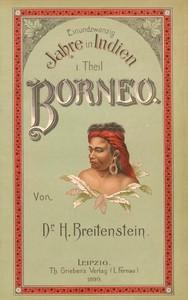
21 Jahre in Indien. Erster Theil: Borneo. by Heinrich Breitenstein
In 1869, a 21-year-old Austrian doctor named Heinrich Breitenstein answered an ad for a medical position in India. Full of youthful ambition, he embarked on a long voyage, only to discover his destination wasn't India at all—it was the island of Borneo. He was essentially marooned there as a physician for a small colonial outpost. This book, the first part of his memoirs, covers those initial, shocking years.
The Story
The story isn't a plotted adventure with a clear villain. It's a survival log, a series of intense encounters. Breitenstein describes landing in a world of immense, humid rainforests, unfamiliar animals, and communities with customs utterly foreign to him. He details his medical work, which often involved battling tropical diseases he'd only read about. He writes about his attempts to communicate, his moments of profound loneliness, and his gradual, hesitant interactions with the Dayak people and other inhabitants. The narrative is driven by his daily struggle to adapt, to be useful, and to make sense of a place that constantly challenged every assumption he brought from Europe.
Why You Should Read It
What makes this book special is its lack of romantic heroism. Breitenstein is often scared, confused, and out of his depth. You get his honest frustration with the climate, his fascination with the natural world, and his dawning respect for the people who call it home. He doesn't position himself as a great explorer; he's more of a bewildered participant. Reading it feels like looking over his shoulder at his diary entries. You see the 19th-century world not through the eyes of a general or a governor, but through a working young man just trying to get through the day in an incredibly strange environment. His observations on plants, animals, and social structures are sharp because he relied on understanding them to live.
Final Verdict
This is a perfect read for anyone who loves real-life adventure stories but is tired of the glossy, triumphant colonial narrative. It's for readers of travel writing who appreciate the gritty, uncomfortable, and humbling side of crossing cultures. If you enjoyed the personal tone of something like The Motorcycle Diaries but want a much older, dustier, and more bewildered version, you'll find a friend in Heinrich Breitenstein. Be prepared for a slow, descriptive pace—it's a journey of observation, not a thriller—but one that leaves you with a powerful sense of time and place.
This historical work is free of copyright protections. Use this text in your own projects freely.
Charles Rodriguez
8 months agoAfter a thorough walkthrough of the table of contents, the way it challenges the status quo is both daring and well-supported. This exceeded my expectations in almost every way.
Anthony Hill
7 months agoText is crisp, making it easy to focus.
Barbara Lopez
7 months agoGreat read!






Jessica Taylor
2 weeks agoI was skeptical about the depth of this book at first, but the nuanced approach to the central theme was better than I expected. I appreciate the effort that went into this curation.